This is general information, not financial advice. Your circumstances are unique — always speak to a qualified mortgage broker before making financial decisions. This page may contain affiliate links. Affiliate disclosure · Terms
Concrete Construction Mortgages (Wimpey No-Fines, Airey, etc.)
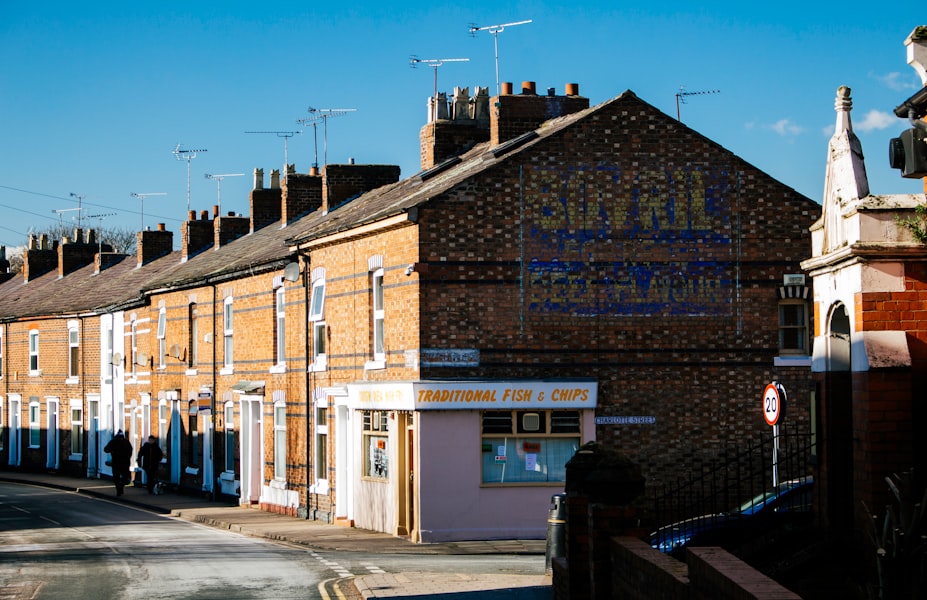
Concrete construction homes — often called PRC (Precast Reinforced Concrete) houses — were built in large numbers across the UK from the 1940s to the 1970s. They were a practical response to the post-war housing crisis, using concrete instead of the bricks and timber that were in short supply. Today, these homes present one of the most challenging mortgage situations, but remediation has opened doors that were once firmly closed.
The Main PRC Types
Dozens of concrete construction systems were used across the UK. The most common include:
Wimpey No-Fines
The most prevalent PRC type, with an estimated 300,000+ built. Uses cast-in-situ concrete without fine aggregate (hence "no-fines"), giving a distinctive rough texture. The concrete walls have no cavity, and the main concerns are carbonation of the concrete and lack of insulation.
Airey Houses
Concrete columns with precast concrete panels. The steel reinforcement in the columns can corrode, causing structural concerns. Approximately 26,000 were built.
Reema
Precast concrete panel construction. Around 25,000 built, mainly in southern England.
Cornish Unit
Precast concrete frame with concrete block infill. Mainly found in the South West, with around 30,000 built.
Unity
Steel frame with precast concrete panels. Found across England.
Orlit
Precast concrete frame with concrete cladding. Used in both housing and commercial buildings.
Boot
Precast concrete pier and panel construction.
Others
Tarran, Smith, Hawksley, Woolaway, Gregory, Underdown, Myton, and several more — each with its own construction details and structural considerations.
Identifying the construction type
Many concrete construction homes look superficially similar to traditional houses, especially if they have been rendered or pebble-dashed. The construction type may not be obvious from the outside. Your solicitor should identify the construction type through local authority records, and a surveyor experienced with PRC should confirm it.
Why Lenders Are Cautious
The concerns about PRC homes are structural and long-term:
Concrete Carbonation
Over time, atmospheric carbon dioxide reacts with the concrete, reducing its alkalinity. This allows the steel reinforcement inside the concrete to corrode, weakening the structure. The rate of carbonation depends on the concrete quality, thickness, and exposure to the elements.
Structural Integrity
Some PRC types have known design flaws — column connections that can fail, panel joints that deteriorate, or inadequate foundations. The Housing Defects Act 1984 officially designated many types as structurally defective.
Thermal Performance
Most PRC homes have very poor insulation by modern standards. Solid concrete walls with no cavity insulation make these homes expensive to heat and difficult to improve thermally.
Resale Difficulties
Because PRC homes are hard to mortgage, they have a limited buyer pool. This reduces their market value and makes lenders even more cautious about using them as security.
The Housing Defects Act 1984
This Act was critical for PRC homeowners. It designated specific construction types as defective, giving local authorities the power (and obligation) to inform owners and facilitate repairs. The key legacy is the PRC certificate — a document confirming that a designated property has been structurally repaired to an approved standard.
Designated Defective Types
The Act designated 23 construction types as defective, including Airey, Boot, Cornish Unit, Dorran, Parkinson, Reema, Stent, Tarran, Unity, Wimpey No-Fines, Woolaway, and others.
PRC Certificates
When a designated property has been repaired under an approved scheme, it receives a PRC certificate. This certificate is essential for mortgage purposes — it confirms that the structural defects have been addressed and the property meets a required standard.
Getting a Mortgage: Remediated vs Unremediated
Remediated (With PRC Certificate)
A PRC home that has been properly remediated and holds a valid PRC certificate is accepted by many mainstream lenders. The certificate transforms the property from "defective" to "repaired to standard" in lenders' eyes.
Lenders who accept remediated PRC homes include:
- Halifax — accepts with valid PRC certificate
- Nationwide — will consider remediated PRC
- NatWest — generally accepts with certificate
- Accord Mortgages — flexible on remediated non-standard
- Various building societies — many accept with appropriate evidence
The deposit requirement is typically 10-20%, similar to standard properties but at the higher end.
Unremediated (No PRC Certificate)
An unremediated PRC home is extremely difficult to mortgage through mainstream channels. Options include:
- Specialist lenders — a very small number may consider it with a detailed structural survey
- Ecology Building Society — has experience with non-standard construction
- Cash purchase — if you have the funds, buying without a mortgage eliminates the lender issue
- Remediate then remortgage — buy with cash or a specialist loan, remediate the property, obtain a PRC certificate, then remortgage with a mainstream lender
Check whether remediation has already happened
Some PRC homes were remediated decades ago, and the current seller may not even realise it (or may have lost the certificate). Check with the local authority, as they should have records of designated defective properties and any remediation carried out under the Housing Defects Act.
The Remediation Process
Full PRC remediation typically involves:
- Structural assessment — identifying the specific defects and their severity
- Removal of defective elements — removing damaged concrete panels, columns, or roof sections
- Structural repair — replacing or strengthening the structure, often with steel or timber frame
- New external cladding — usually brick, render, or insulated panels
- Insulation upgrade — modern insulation installed as part of the new cladding
- New roof (if the original is concrete)
- Issue of PRC certificate — confirming the work meets the approved standard
Remediation Costs
Costs vary significantly by property type and size:
- Basic remediation: £20,000-40,000
- Comprehensive remediation: £40,000-80,000+
- Full rebuild of external envelope: £60,000-100,000+
These are substantial sums, but they should be weighed against the discounted purchase price of unremediated PRC homes, which can be 30-50% below the value of standard construction equivalents.
Surveys and Reports Needed
- PRC-specific structural survey: £500-1,500 from a surveyor experienced with the specific PRC type
- PRC certificate (if remediated) — this should be provided by the seller
- Building survey: To assess overall condition beyond the structural elements
- Energy assessment: Useful for understanding heating costs and potential improvements
Practical Advice
- Identify the exact PRC type before anything else — each type has different structural characteristics and remediation requirements
- Check for a PRC certificate — if one exists, the mortgage process is dramatically easier
- Get a specialist survey — a general surveyor may not have the expertise to assess PRC properly
- Factor in all costs — purchase price plus remediation (if needed) plus ongoing maintenance
- Check local authority records — they may have information about the property's history, including any designation under the Housing Defects Act
- Consider the investment case — buying an unremediated PRC home cheaply, remediating it, and remortgaging can create significant equity, but it requires capital upfront
- Use a specialist broker — they will know which lenders accept which PRC types and in what condition
Insurance Considerations
Insuring a concrete construction home is more complex and more expensive than insuring a standard brick-built property:
Finding Insurance
- Standard insurers may decline unremediated PRC homes or charge significant premiums
- Specialist insurers such as Adrian Flux, HomeProtect, and some Lloyd's of London syndicates have experience with non-standard construction
- Remediated properties with a PRC certificate are generally accepted by mainstream insurers, though premiums may still be 10-30% higher than standard homes
- NFU Mutual and some regional insurers may be more pragmatic, particularly in areas where PRC homes are common
Rebuild Cost Assessment
Getting the rebuild cost right is critical. PRC homes cannot simply be rebuilt in their original form — remediation standards and modern Building Regulations mean a different approach is needed. A specialist rebuild cost assessment (£200-400) is worthwhile to ensure you are neither under-insured nor overpaying.
Common Exclusions
Some insurers may exclude pre-existing structural defects on unremediated properties, or apply large excesses for subsidence claims. Check the policy wording carefully, as PRC homes with shallow foundations can be more susceptible to ground movement.
Regional Prevalence
Concrete construction homes are not evenly distributed across the UK. Understanding where they are concentrated helps explain local market conditions:
The Midlands and the North
The highest concentrations of PRC homes are found in the Midlands, the North of England, and parts of Scotland. These areas saw the most intensive post-war council house building programmes. Towns like Corby, Northampton, Wolverhampton, and many former mining communities have significant PRC estates.
South West England
Cornish Unit homes are — as the name suggests — concentrated in Cornwall and Devon. Approximately 30,000 were built, making them a significant part of the local housing stock. Some South West building societies have particular experience with these properties.
East Anglia and the South East
Airey and Reema homes are found across eastern and southern England. Some areas of Norfolk, Suffolk, and Essex have notable concentrations.
Scotland
Scotland has its own stock of PRC homes, including some types (like the Scottish Special Housing Association builds) not widely found elsewhere. Scottish lenders and solicitors tend to be familiar with these.
Wales
Parts of Wales, particularly the South Wales valleys, have significant numbers of PRC homes built as council housing in the post-war decades.
Why Regional Prevalence Matters for Mortgages
In areas with many PRC homes, local building societies and surveyors tend to be more experienced with and pragmatic about these properties. A building society in Northampton that sees PRC homes regularly is likely to be more comfortable lending on one than a London-based lender that rarely encounters them.
What the Valuer Looks For
When a surveyor values a PRC home for mortgage purposes, they are assessing specific things beyond a standard valuation:
Construction Type Identification
The surveyor must identify the exact PRC type. This matters because each type has different structural characteristics, different known defects, and different remediation requirements. An experienced surveyor will recognise the construction from visual cues — the panel joints, the render pattern, the roof type — and confirm it against property records.
Evidence of Deterioration
The valuer looks for visible signs of concrete deterioration:
- Spalling — where the surface of the concrete is flaking or crumbling away, often exposing the steel reinforcement beneath
- Cracking — particularly horizontal or diagonal cracks that suggest structural movement
- Rust staining — brown staining on the concrete surface indicates that the steel reinforcement is corroding
- Panel joint deterioration — gaps or movement at the joints between precast panels
Remediation Status
If the property has been remediated, the valuer will want to see the PRC certificate and assess the quality of the remediation work. They will check whether the external cladding is in good condition, whether the insulation appears adequate, and whether the roof has been replaced if it was originally concrete.
Comparable Evidence
The valuer needs recent sales of similar PRC homes in the area to support their valuation. In areas with many PRC homes, this is usually straightforward. In areas where they are rare, the lack of comparable evidence can make valuation more difficult and potentially conservative.
Renovation and Improvement Impact
One of the most significant aspects of PRC homes is how dramatically remediation and improvement can change their mortgageability:
Before Remediation
- Very limited mortgage options (cash or specialist lenders only)
- Property value typically 30-50% below brick-built equivalents
- Higher insurance costs and potential difficulty finding cover
- Limited buyer pool, making resale slow
- Poor energy efficiency and high heating bills
After Full Remediation (With PRC Certificate)
- Accepted by many mainstream lenders
- Property value typically rises to within 10-20% of brick-built equivalents
- Standard insurance more readily available
- Wider buyer pool improves saleability
- Modern insulation significantly reduces heating costs
- Property appearance is often dramatically improved
Partial Improvements
Some owners carry out partial improvements — such as adding external insulation or replacing windows — without undertaking full PRC remediation. While these improvements are worthwhile for comfort and energy efficiency, they do not produce a PRC certificate and therefore do not change the property's status in lenders' eyes. For mortgage purposes, it is the certificate that matters, not the individual improvements.
The Investment Case
Buying an unremediated PRC home, carrying out full remediation, and then remortgaging with a mainstream lender is a recognised strategy. The numbers can work well:
- Purchase price: £60,000-90,000 (depending on location and size)
- Remediation costs: £30,000-80,000 (depending on type and extent)
- Total investment: £90,000-170,000
- Post-remediation value: £130,000-220,000+ (depending on location)
These figures vary enormously by location and property type, but the margin can be substantial. The challenge is that you need access to the purchase price plus remediation costs upfront (or through a specialist bridging loan), as mainstream mortgages are not available until the PRC certificate is issued.
Edge Cases and Unusual Situations
Mixed Construction
Some properties combine PRC construction with other building methods — for example, a PRC ground floor with a traditional timber-frame roof extension. These can be particularly difficult to categorise and may confuse both surveyors and lenders. A specialist survey is essential.
Non-Designated PRC Types
Not all concrete construction homes were designated under the Housing Defects Act 1984. Some types — particularly those built by private developers rather than local authorities — were not included. These homes may have similar structural concerns but no formal remediation pathway or PRC certificate system. Lenders assess these on a case-by-case basis, typically requiring a detailed structural engineer's report.
PRC Homes in Conservation Areas
If a PRC home is in a conservation area, remediation work (particularly changes to the external appearance) may require planning permission and must respect the area's character. This can complicate and delay the remediation process.
Right to Buy PRC Homes
Many PRC homes were originally council-owned and have been purchased through Right to Buy. If you are buying an ex-council PRC home, check whether remediation was carried out while it was still council-owned. Local authorities have records of PRC remediation programmes, and a certificate may exist even if the current owner is unaware of it.
The Bottom Line
Concrete construction homes are a significant part of the UK housing stock, and they are not going away. With proper remediation and a PRC certificate, they can be perfectly good homes that are accepted by mainstream mortgage lenders. Without remediation, they remain one of the hardest property types to finance.
If you are considering a PRC home, go in with your eyes open, your surveyor booked, and your budget calculated. The right property at the right price can be an excellent purchase.
If concrete construction is limiting your mortgage options, selling directly for cash may be the fastest route. SellTo offers free cash valuations with no fees to the seller.(affiliate)
Specialist brokers
Brokers who handle non-standard construction
These services are free to use — the lender pays them, not you. We may earn a commission if you use their services.
Habito
Digital-first, all situations — 90+ lenders
John Charcol
Established whole-of-market broker since 1974
Boon Brokers
Fee-free broker, all situations including adverse credit
All brokers presented equally. Not a personal recommendation. Affiliate disclosure
This is educational content, not financial advice. Your situation is unique — speak to a qualified mortgage broker before making any decisions.
Related reading
Steel Frame House Mortgage
Getting a UK mortgage on a steel frame house. Learn about BISF homes, modern steel frame, corrosion concerns, and which lenders accept this construction.
Ex-Council House Mortgage: What Lenders Think
Getting a mortgage on an ex-council house in the UK. Learn why some lenders hesitate, which construction types cause issues, and how to find flexible lenders.
Timber Frame House Mortgage: Who Lends?
Getting a UK mortgage on a timber frame house. Modern vs traditional timber frame, which lenders accept them, and what surveys you need.
Non-Standard Construction Mortgages: What Counts and Who Lends?
UK guide to mortgages on non-standard construction homes. Timber frame, concrete, PRC, thatched — which lenders accept what and what surveys you need.
Not sure about your mortgage options?
Find out your options — whether it's your circumstances or your property holding you back. Free, no judgement, no cold calls.
Get my free results