This is general information, not financial advice. Your circumstances are unique — always speak to a qualified mortgage broker before making financial decisions. This page may contain affiliate links. Affiliate disclosure · Terms
Ex-Council House Mortgage: What Lenders Think
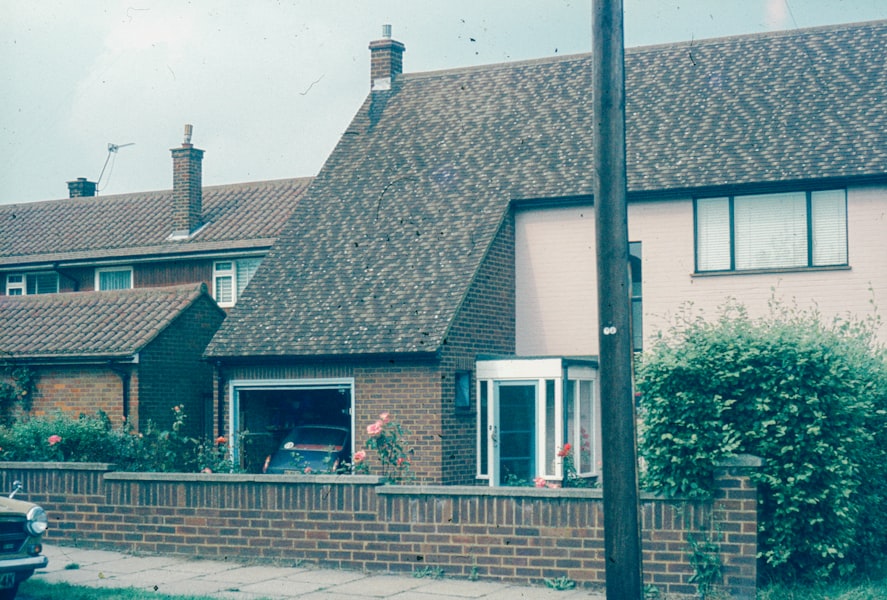
Ex-council properties make up a significant portion of the UK housing stock, and they are often among the most affordable options for first-time buyers. Most lenders will happily mortgage an ex-council house — but some specific characteristics can cause problems.
Why the Stigma?
The perception that ex-council properties are hard to mortgage is partly outdated and partly based on real issues. The outdated part is the social stigma — some lenders historically avoided entire estates regardless of property quality. That has largely changed.
The real issues that remain are about the properties themselves, not their history as council housing.
Construction Type: The Main Issue
Many council properties, particularly those built between the 1940s and 1970s, used non-standard construction methods. These were chosen for speed and cost during periods of mass housebuilding, but they can cause mortgage difficulties:
Concrete Construction
Airey, Wimpey No-Fines, Reema, Cornish Unit, Unity, and other concrete prefab systems were widely used in council housing. Some have been structurally repaired under PRC (Prefabricated Reinforced Concrete) schemes, which can make them mortgageable.
Steel Frame
Some council properties use steel frame construction, which raises concerns about corrosion and longevity. A structural survey can confirm the condition.
Traditional Brick and Block
If the ex-council property is built with standard brick and block construction, most lenders will treat it no differently from any other brick-built property.
Check the construction before you fall in love with a property
Ask the estate agent or seller about the construction type before you invest in surveys. If it is non-standard construction, you need to know early so you can assess your mortgage options.
Ex-Council Flats vs Houses
Ex-council houses are generally easier to mortgage than ex-council flats, for several reasons:
Houses
- You usually own the freehold
- You control the maintenance
- Standard construction houses are treated like any other house
- Good resale market in most areas
Flats
- Usually leasehold with the council or housing association as freeholder
- High-rise blocks (over 6 storeys) face additional challenges
- Cladding concerns may apply (see our EWS1 article)
- Service charges can be unpredictable
- Some deck-access or walkway-access designs are viewed negatively by lenders
Right to Buy Considerations
If you are buying your council home through the Right to Buy scheme, there are specific mortgage considerations:
The Discount
Right to Buy offers discounts of up to £102,400 (£136,400 in London) as of 2025/26 — these caps are updated annually, so check gov.uk for the latest figures. This discount effectively acts as a deposit, which is excellent for mortgage purposes. If a property is valued at £180,000 and you receive a £50,000 discount, you only need a mortgage of £130,000 — and the lender views the £50,000 discount as equity.
Repayment of Discount
If you sell the property within five years of buying it through Right to Buy, you must repay some or all of the discount. This is a declining percentage: 100% in the first year, 80% in the second, and so on. Some lenders factor this in, but it should not prevent you from getting a mortgage.
Pre-Emption Rights
In some cases, the council has the right to buy back the property within 10 years if you decide to sell. This is more common with rural properties under the Right to Buy scheme.
Right to Buy and family members
Only the named tenant(s) and qualifying family members who have lived in the property for at least 12 months can be party to a Right to Buy purchase. If you are helping a family member buy their council home, make sure the legal arrangements are correct from the start.
What Surveys Are Needed?
For a standard brick-built ex-council house, a basic valuation (for the lender) and a HomeBuyer Report (for you) are usually sufficient.
For non-standard construction properties, you may need:
- A structural survey — essential for concrete or steel frame properties
- A PRC certificate — if the property has been repaired under a PRC scheme
- An asbestos survey — some council properties of certain ages contain asbestos in artex ceilings, floor tiles, or other materials
- A cladding assessment / EWS1 form — if it is a flat in a building over 11 metres
Which Lenders Are Flexible?
Most mainstream lenders will consider ex-council properties with standard construction:
- Halifax, Nationwide, NatWest, Barclays — all generally accept standard-construction ex-council homes
- Building societies — many are flexible and take an individual approach
- Specialist lenders — for non-standard construction, lenders like Ecology Building Society or specialist providers may help
The key factor is almost always the construction type and condition, not the fact that it was once a council property.
Typical Deposit Requirements
For a standard-construction ex-council property: 5-10% (same as any other standard property)
For non-standard construction or high-rise flats: 15-25% depending on the specific issues
For Right to Buy purchases: the discount often covers the deposit requirement
Practical Advice
- Identify the construction type early in the process
- Check the lease if buying a flat — length, service charges, ground rent, and who manages the building
- Research the estate — some ex-council estates have been well-maintained and are desirable; others have ongoing management issues
- Factor in maintenance — if you are buying a house, you are responsible for all maintenance; factor this into your budget
- Check for planned works — if buying a flat, ask whether any major works (new roof, external repairs) are planned, as these can result in large service charge bills
- Do not overpay — ex-council properties should be priced below privately built equivalents in the same area; make sure you are getting genuine value
Insurance Considerations
Ex-council homes with standard brick construction can be insured through any mainstream insurer without difficulty. The premiums should be comparable to any other brick-built property of similar age and size.
Where insurance becomes more complex:
Non-Standard Construction
If the property is concrete construction or steel frame, some insurers will decline cover or charge higher premiums. Specialist insurers like Adrian Flux, HomeProtect, or NFU Mutual may be needed.
Ex-Council Flats in Blocks

Buildings insurance for flats is arranged by the freeholder or managing agent and recharged through service charges. In ex-council blocks, the local authority or housing association typically arranges this. Check that the cover is adequate and that the excess is reasonable — some block policies have very high excesses.
Asbestos
Many council-built properties from the 1950s-1980s contain asbestos in various forms — artex ceilings, floor tiles, insulating boards around boilers, and soffit boards. While undisturbed asbestos is not dangerous, insurers may ask about it, and any future renovation work needs to account for safe asbestos removal or encapsulation. The presence of asbestos does not prevent insurance, but removal costs should be factored into your long-term budget.
What the Valuer Looks For
When a surveyor values an ex-council property for mortgage purposes, they are assessing several specific factors:
Construction Type
The surveyor will identify the construction type and report it to the lender. Standard brick and block construction will not cause issues. Non-standard construction will be flagged and the lender's criteria applied.
Estate Character
Surveyors assess the general environment, not just the individual property. They consider:
- The overall condition and appearance of the estate
- Whether the area is well-maintained or showing signs of neglect
- The proportion of owner-occupied versus rented properties
- Access arrangements and parking
- Proximity to amenities
An estate where most properties have been well-maintained and are owner-occupied will receive a more positive assessment than one with visible problems.
Modifications and Extensions
Many ex-council homes have been extended or modified by their owners over the years. The surveyor will check whether extensions appear to have been built to a reasonable standard and whether they are likely to have had the necessary planning permissions and Building Regulations approval. Poorly built extensions can reduce the valuation or cause the lender to request further investigation.
Deck Access and Walkway Flats
Some ex-council flat designs — particularly deck-access blocks where you walk along an open corridor to reach your front door — are viewed negatively by some lenders and surveyors. These designs can be associated with security concerns and have a weaker resale market than conventional stairwell-access flats.
Regional Variations
Ex-council housing varies significantly across the UK, and regional differences affect both mortgage availability and value:
London
Ex-council properties in London can be extraordinarily good value compared to privately built alternatives. In boroughs like Camden, Islington, and Lambeth, Right to Buy flats on council estates sit alongside multi-million-pound private homes. The discount to private equivalent can be 20-40%, making them attractive to first-time buyers. However, London ex-council flats in high-rise blocks face cladding and building safety scrutiny.
The Midlands and the North
Large council estates in Birmingham, Manchester, Leeds, Sheffield, and other northern cities include significant numbers of non-standard construction homes. PRC homes are particularly common. Prices are lower, but so are remediation costs relative to the uplift in value. Local building societies tend to understand these properties well.
Scotland
Scotland has a distinct council housing tradition, with many estates built using concrete panel systems specific to Scotland. The Right to Buy was abolished in Scotland in 2016, so no new Right to Buy purchases are possible there. Existing ex-council properties can still be bought on the open market.
Wales
Welsh ex-council estates include notable numbers of PRC homes, particularly in the South Wales valleys. The Welsh Government has its own approach to housing standards and energy efficiency, which may affect renovation requirements.
Rural Areas
In rural areas, ex-council homes are sometimes among the few affordable properties available. They may have been built using local materials or construction methods that differ from urban council housing. Right to Buy properties in rural areas may have pre-emption clauses giving the council first refusal if you sell within 10 years.
Survey Requirements and Costs
The level of survey needed depends on the construction type and age:
Standard Brick Construction
- Lender's valuation: £250-500 (often included in the mortgage deal)
- HomeBuyer Report (Level 2): £300-600 — recommended for your own protection
- Building Survey (Level 3): £500-1,000 — worthwhile for older properties or if you plan significant work
Non-Standard Construction
- Structural survey: £500-1,500 — essential for concrete or steel frame properties
- PRC-specific assessment: £500-1,500 — if the property is a designated defective type
- Asbestos survey: £150-400 — recommended for properties built between 1950 and 1985
High-Rise Flats
- EWS1 assessment: Arranged at building level, not individual flat level
- Service charge review: Your solicitor should obtain the last 3 years of accounts
- Building safety documentation: Required for buildings over 18 metres
Before-and-After Scenarios
To illustrate how the mortgage picture can change with the right steps:
Scenario 1: Wimpey No-Fines with PRC Certificate
A Wimpey No-Fines house in Wolverhampton with a valid PRC certificate from a 1990s remediation programme. The property looks modern externally with brick cladding and has adequate insulation. Result: Accepted by most mainstream lenders with a 10-15% deposit. Standard insurance available. Valued comparably to brick-built homes on the same estate.
Scenario 2: Unremediated Airey House
An Airey house in County Durham with no PRC certificate. The concrete columns show signs of carbonation and the property has very poor insulation. Result: Declined by mainstream lenders. Specialist lenders may consider with 25% deposit and a detailed structural report. Insurance limited to specialist providers. Valued at approximately 40% below brick-built equivalents.
Scenario 3: Standard Brick Ex-Council Semi
A 1960s brick-built ex-council semi in Nottingham, well-maintained with a modern extension and garden. Result: No mortgage complications whatsoever. Treated identically to any other brick-built property. Standard rates, standard deposit, standard insurance.
Scenario 4: Ex-Council Flat in High-Rise
An ex-council flat on the 8th floor of a 1970s tower block in South London with cladding issues. Result: Mortgage availability depends entirely on the building's EWS1 status and remediation progress. If the building has a satisfactory fire safety assessment, mainstream lenders will consider. If not, options are very limited until the building safety situation is resolved.
The Bottom Line
Ex-council properties represent some of the best value in the UK housing market. Many are well-built, spacious, and located in established communities with good transport links. The mortgage challenges are almost entirely about construction type and building-specific issues, not about the "ex-council" label itself.
With the right property and the right lender, getting a mortgage on an ex-council home is straightforward.
If ex-council designation is limiting your options, selling directly for cash may be the fastest route. SellTo offers free cash valuations with no fees to the seller.(affiliate)
Specialist brokers
Brokers who handle ex-council properties
These services are free to use — the lender pays them, not you. We may earn a commission if you use their services.
Habito
Digital-first, all situations — 90+ lenders
John Charcol
Established whole-of-market broker since 1974
Boon Brokers
Fee-free broker, all situations including adverse credit
All brokers presented equally. Not a personal recommendation. Affiliate disclosure
This is educational content, not financial advice. Your situation is unique — speak to a qualified mortgage broker before making any decisions.
Related reading
Concrete Construction Mortgages (Wimpey No-Fines, Airey, etc.)
Getting a UK mortgage on a concrete construction home — Wimpey No-Fines, Airey, Reema, Cornish Unit, and more. PRC certificates, remediation, and lending options.
High-Rise Flat Mortgage: Over 6 Storeys
Getting a UK mortgage on a high-rise flat over 6 storeys. Cladding, EWS1, service charges, and which lenders will consider tower block flats.

Right to Buy Mortgage: Ex-Council to Homeowner
How to get a mortgage for Right to Buy in the UK. Understand the discount, eligibility, which lenders accept RTB, and how bad credit affects your options.
Non-Standard Construction Mortgages: What Counts and Who Lends?
UK guide to mortgages on non-standard construction homes. Timber frame, concrete, PRC, thatched — which lenders accept what and what surveys you need.
Not sure about your mortgage options?
Find out your options — whether it's your circumstances or your property holding you back. Free, no judgement, no cold calls.
Get my free results