This is general information, not financial advice. Your circumstances are unique — always speak to a qualified mortgage broker before making financial decisions. This page may contain affiliate links. Affiliate disclosure · Terms
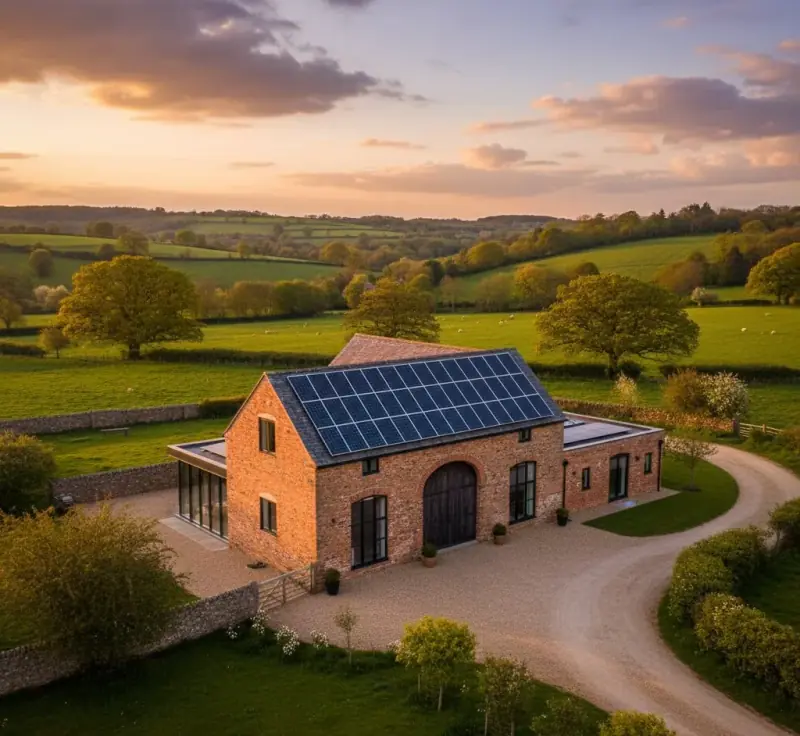
Solar panels are increasingly common on UK rooftops, and in most cases they make a property more attractive — lower energy bills, better EPC rating, and potentially income from exporting electricity back to the grid. But there is a critical distinction that can make or break a mortgage application: whether the panels are owned outright or leased.
Owned vs Leased: The Critical Difference
This is the single most important thing to understand about solar panels and mortgages. The distinction between owned and leased panels is the difference between a straightforward mortgage application and a potentially very difficult one.
Owned Solar Panels
If the homeowner bought and paid for the solar panels themselves (or had them installed through a grant scheme that transferred ownership), they own them. The panels are a fixture of the property, like a new kitchen or a conservatory. When the property is sold, the panels transfer to the new owner as part of the sale.
Mortgage impact: Minimal. Most lenders treat owned solar panels as a property improvement. Some may ask a few questions about the installation (was it done by a certified installer, is the roof in good condition, are building regulations met), but owned panels are generally not a problem.
Leased Solar Panels (Rent-a-Roof Schemes)
Between roughly 2010 and 2015, "rent-a-roof" or "free solar panel" schemes were heavily marketed in the UK. Under these arrangements:
- A company installed solar panels on your roof at no cost to you
- In return, the company retained ownership of the panels and the right to the Feed-in Tariff payments
- The homeowner got free or reduced-cost electricity from the panels
- A roof lease (typically 20-25 years) was registered against the property's title
This is where the mortgage problems begin.
Why Leased Panels Cause Mortgage Problems
The Roof Lease
When a solar panel company installs leased panels, they typically register a lease over the roof space. This lease is a legal interest in the property that appears on the title deeds. It grants the solar company rights to:
- Keep their panels on your roof for the duration of the lease
- Access the roof to maintain the panels
- Receive the FiT or SEG payments generated by the panels
- Potentially object to changes that affect the panels (like roof repairs or extensions)
From a lender's perspective — whether a high street bank or specialist — this creates several problems:
- A third party has rights over part of the property — the lender's security is compromised because they do not have a clean charge over the entire property
- The lease may take priority over the mortgage — depending on when it was registered, the solar lease might rank ahead of the mortgage, meaning the solar company's interests come before the lender's
- Complications if the property is repossessed — if the lender needs to repossess, they inherit a property with a roof lease and obligations to a solar panel company
- Maintenance access obligations — the solar company has a right to access the property, which complicates the lender's security
The Numbers Tell the Story
When rent-a-roof schemes were at their peak, the Feed-in Tariff rate was generous enough to make them financially viable for the solar companies. The typical arrangement might look like this:
- The company installs £6,000-8,000 worth of panels for free
- They receive FiT payments of £800-1,200 per year
- The homeowner gets free daytime electricity worth perhaps £200-400 per year
- The lease runs for 25 years
The company makes their money; the homeowner gets cheaper electricity. But the homeowner also gets a roof lease that makes their property harder to mortgage and potentially harder to sell.
Check before you buy
If you are viewing a property with solar panels, ask the estate agent directly: are the panels owned or leased? If leased, ask for the lease details immediately. Do not proceed to a mortgage application without understanding the lease terms — it could save you weeks of wasted time and hundreds of pounds in aborted fees.
Which Lenders Accept Leased Panels?
Lender acceptance of leased solar panels has improved somewhat since the early days of rent-a-roof, but it remains patchy.
Generally Willing
- A small number of mainstream lenders have developed specific criteria for properties with solar panel leases, including requirements about the lease terms, the identity of the solar company, and the remaining lease duration
- Some building societies will consider on a case-by-case basis
Generally Reluctant or Declining
- Many high street lenders still decline properties with solar panel roof leases
- Lenders with rigid criteria that do not accommodate third-party interests on the title
What Lenders Want to See (Where They Will Consider)
If a lender is willing to look at a property with leased panels, they typically require:
- The solar panel company to be an approved provider (major companies, not small outfits that might go bust)
- The lease to include provisions for removal of the panels at the end of the term
- The lease to include provisions allowing the roof to be repaired without unreasonable obstruction
- The FiT or SEG registration to be properly documented
- The lease not to take priority over the mortgage
Feed-in Tariff and Smart Export Guarantee
Understanding these schemes helps you assess the financial value of solar panels on a property.
Feed-in Tariff (FiT)
The FiT scheme closed to new applicants in March 2019, but existing installations continue to receive payments for their full 20-year or 25-year term. If a property has panels registered under FiT, those payments can be significant — particularly for installations registered before tariff rates were reduced.
Key points:
- FiT payments belong to the registered owner of the system — when you buy a property with owned panels, the FiT registration should be transferred to you
- If the panels are leased, the FiT payments typically go to the leasing company, not the homeowner
- FiT rates for early installations can be 40-50p per kWh generated — substantially more than current energy prices
- The FiT payments are index-linked to RPI
Smart Export Guarantee (SEG)

The SEG replaced the export element of FiT for new installations from January 2020. Under SEG, energy suppliers with more than 150,000 customers must offer a tariff for exported solar electricity, though the rate varies significantly between suppliers.
Current SEG rates typically range from 3-15p per kWh exported, depending on the supplier and the tariff. While less generous than the original FiT export rates, SEG payments still provide some income from solar panels.
EPC Impact
Solar panels almost always improve a property's Energy Performance Certificate rating. Since the EPC affects both running costs and mortgage affordability (some lenders offer preferential rates for energy-efficient properties), this is a genuine benefit.
A typical domestic solar panel installation can improve an EPC rating by 10-15 SAP points, which could push a property from a D rating to a C, or from an E to a D. Given increasing focus on energy efficiency in property — and potential future regulations around minimum EPC ratings for lettings — this improvement has real value.
Green mortgage products
Some lenders now offer "green" mortgage products with lower interest rates for energy-efficient properties. If you are buying a property with owned solar panels that has a strong EPC rating, ask your broker whether any green mortgage deals are available. The savings can be worthwhile.
What to Check Before Buying a Property with Solar Panels
For Owned Panels
- Installation certificate — was the installation done by an MCS (Microgeneration Certification Scheme) accredited installer?
- Building regulations compliance — were the necessary notifications made?
- Roof condition — are the panels causing any damage to the roof? Are there signs of leaks?
- FiT or SEG registration — if the panels generate income, can the registration be transferred to you?
- Warranty — is there a manufacturer's warranty on the panels and inverter, and what does it cover?
- Insurance — does the homeowner's buildings insurance cover the panels?
For Leased Panels
- The lease itself — read it carefully. How long does it have left? What are the terms for transferring it?
- The solar company — are they still trading? If the company has gone bust, who now holds the lease?
- Removal options — can you buy out the lease and take ownership of the panels? At what cost?
- Assignment process — what is involved in transferring the lease to a new owner? Are there fees?
- Priority — does the lease take priority over any existing or future mortgage?
- End-of-lease provisions — what happens when the lease expires? Who pays for panel removal if needed?
Defunct solar companies
Some of the companies that installed leased panels during the 2010-2015 boom have since gone into administration. If the original company no longer exists, the lease may have been transferred to another entity (often an investor who bought the company's assets). Tracking down the current lease holder can be time-consuming but is essential before buying.
Buying Out a Solar Panel Lease
If you are buying a property with leased panels and the lease is causing mortgage problems, buying out the lease is one solution. This means paying the solar company an agreed sum to transfer ownership of the panels to you and release the roof lease.
The cost of a buyout depends on:
- The remaining FiT payments the company would receive over the rest of the lease
- The age and condition of the panels
- The company's willingness to negotiate
Buyout costs vary widely but can range from £1,000 to £8,000 or more, depending on the remaining lease term and the FiT rate. If the panels are on a high early FiT rate with many years remaining, the buyout cost will be higher.
It is worth doing the maths. If the buyout cost is reasonable and it removes the mortgage obstacle, it may be worth negotiating with the seller to split the cost or asking them to complete the buyout before the sale.
Practical Advice
- Always ask about panel ownership before making an offer — estate agents should know, but check with the seller's solicitor too
- If panels are leased, get the lease details immediately — this determines whether a mortgage is feasible and which lenders to approach
- Consider the buyout option if leased panels are the only obstacle to an otherwise good purchase
- Use a broker experienced with solar panel properties — the lending criteria change frequently and a specialist will know the current position
- Factor in the value of the panels when assessing the property — owned panels with FiT income are a genuine financial asset
- Check the roof — panels installed years ago may have caused or hidden roof issues. A full building survey is advisable
The Outlook
Solar panels are becoming more common, and the lending market is gradually adapting. Owned panels are essentially a non-issue for most lenders. Leased panels remain problematic, but as older leases start to expire (the earliest rent-a-roof installations are now past the halfway point of their lease terms) and buyout options become more common, this issue will slowly diminish.
If you are installing solar panels on a property you own, the advice is clear: buy them outright. The cost has dropped dramatically — a typical 4kW domestic installation now costs £5,000-7,000 — and owning the panels gives you all the benefits (free electricity, SEG income, better EPC) without any of the mortgage complications. Our sister site IWantSolar covers costs, installers, and the Smart Export Guarantee in detail if you're considering an installation.
If solar panel lease agreements are complicating the mortgage, selling directly for cash may be the fastest route. SellTo offers free cash valuations with no fees to the seller.(affiliate)
Our exclusive broker partner
Create Finance — for properties with solar panels
Create Finance is authorised and regulated by the FCA — Unmortgageable is not. We earn a referral fee from Create Finance only if your mortgage completes through them. This never affects what you pay or what advice you receive.

Unmortgageable is not FCA-authorised. Create Finance is — verify them independently on the FCA Register. See our affiliate disclosure.
This is educational content, not financial advice. Your situation is unique — speak to a qualified mortgage broker before making any decisions.
Related reading
Non-Standard Construction Mortgages: What Counts and Who Lends?
UK guide to mortgages on non-standard construction homes. Timber frame, concrete, PRC, thatched — which lenders accept what and what surveys you need.
Mortgage on a Pre-1900 Property with No EPC
Getting a mortgage on a pre-1900 property with no EPC or low energy rating. Understand how older UK homes are assessed and which lenders are flexible.

Specialist Mortgage Lenders UK: Who Are They?
Who are the specialist mortgage lenders in the UK? A comprehensive guide to lenders who help with bad credit, self-employment, and non-standard situations.

Mortgage Broker vs Going Direct to a Bank
Should you use a mortgage broker or go direct to a bank? Compare the pros, cons, and costs of each approach for UK mortgage applicants.
Not sure about your mortgage options?
Find out your options — whether it's your circumstances or your property holding you back. Free, no judgement, no cold calls.
This page is educational content, not financial advice or a personal recommendation. Unmortgageable is not FCA-authorised. Any broker or lender we link to is separately regulated — verify them on the FCA Register before engaging. See our affiliate disclosure.