This is general information, not financial advice. Your circumstances are unique — always speak to a qualified mortgage broker before making financial decisions. This page may contain affiliate links. Affiliate disclosure · Terms
Houseboat and Park Home Finance: Can You Get a Mortgage?
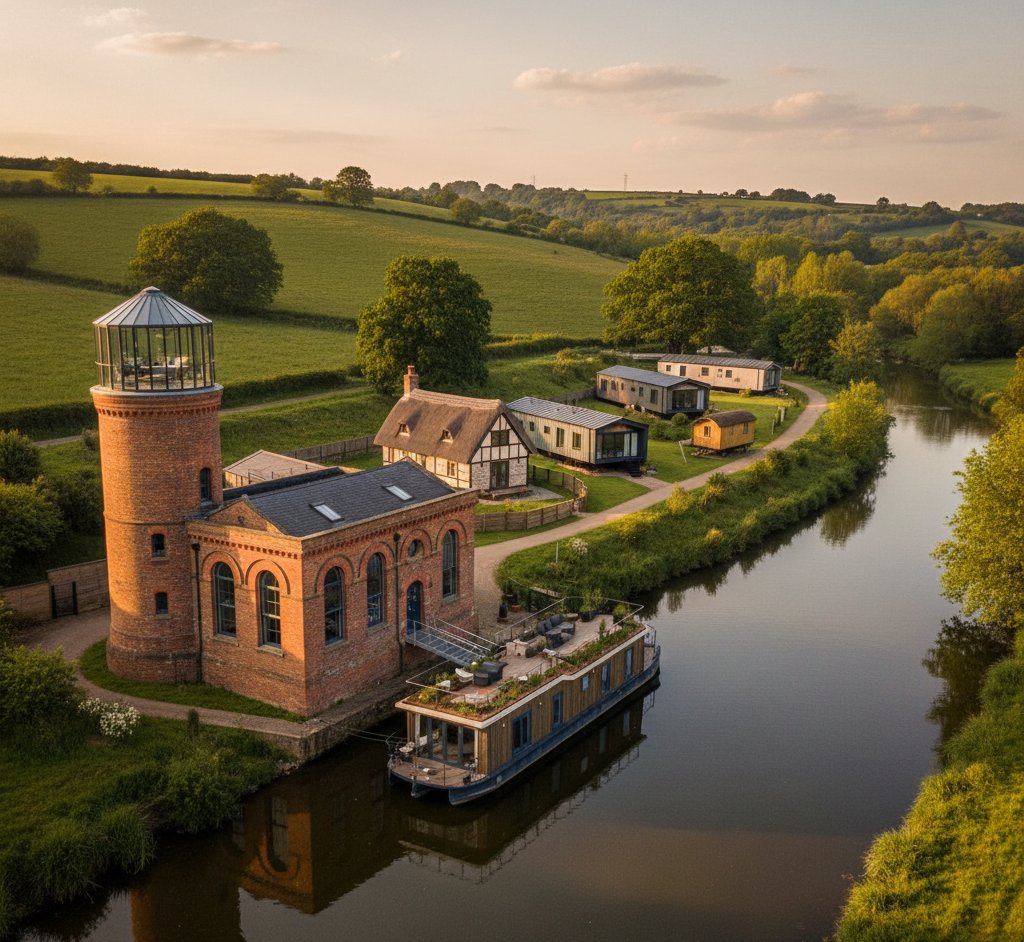
If you are looking at buying a houseboat or park home, the first thing to understand is that conventional mortgages almost certainly will not apply — this is a non-standard construction situation taken to its extreme. These are not standard properties in the legal sense — houseboats are not land, and park homes are chattels rather than real estate. That does not mean finance is unavailable, but the options, costs, and protections are quite different from a standard house purchase.

Why Standard Mortgages Do Not Apply
A mortgage is a loan secured against property — specifically, against land and anything permanently attached to it. The lender registers a charge against the property at the Land Registry, giving them the right to repossess and sell if you default.
Houseboats and park homes fall outside this framework:
- A houseboat sits on water, not on land you own. Even if you own the boat outright, the mooring is typically licensed or leased — you do not own the waterway or the riverbed
- A park home sits on a pitch in a park, on land owned by the site operator. You own the structure (the home itself) but not the land beneath it. Legally, a park home is a chattel — a moveable possession — not real property
Because there is no land to register a charge against, standard mortgage lenders simply cannot lend in the normal way.
Houseboats
Types of Houseboat
The term "houseboat" covers several very different types of vessel:
- Narrowboats: The classic canal boat, typically 6 feet 10 inches wide and up to 72 feet long. These can cruise the canal network or stay on a permanent mooring
- Widebeam boats: Broader than narrowboats (typically 10-12 feet wide), offering more internal space but restricted to wider waterways
- Dutch barges: Converted commercial vessels, often spacious and characterful
- Purpose-built floating homes: Modern structures built on pontoons, designed as permanent residences. These are becoming more common in developments like those in London's docklands
- Converted vessels: Former working boats, lifeboats, or other vessels converted for residential use
The Cost of Living Afloat
Buying a houseboat can seem attractively cheap compared to bricks and mortar, but the running costs add up:
- The boat itself: Narrowboats range from £20,000-30,000 for an older, basic boat to £150,000+ for a new, high-specification build. Dutch barges and purpose-built floating homes can cost more
- Mooring fees: These vary dramatically by location. A residential mooring in London can cost £10,000-20,000+ per year. Outside London, residential moorings range from £3,000-10,000 per year. A continuous cruiser licence (no permanent mooring, you must move every 14 days) is cheaper but comes with a very different lifestyle
- Boat Safety Certificate (BSC): Required every four years, typically £150-300
- Insurance: Marine insurance is required, typically £300-800 per year
- Maintenance: Boats need regular maintenance — blacking the hull (every 2-4 years, £1,000-2,000), engine servicing, and ongoing repairs. Budget at least £2,000-3,000 per year
- Canal & River Trust licence: Required for boats on CRT waterways, currently around £1,000-1,500 per year depending on boat length
Marine Finance for Houseboats
Marine finance works similarly to a car loan — it is a secured loan with the vessel as collateral.
Key features:
- Loan terms: Typically 5-15 years (shorter than a mortgage)
- Interest rates: Higher than mortgage rates — typically 6-12% depending on the lender, the boat, and your credit profile
- Deposit: Usually 10-25% of the boat's value
- The boat is the security: If you default, the lender can repossess the boat (but not any separate mooring)
- Regulated agreements: Marine finance for personal use is regulated by the Financial Conduct Authority
Marine finance providers include:
- Lombard Marine Finance
- Promarine Finance
- Pegasus Marine Finance
- Some banks — Barclays and HSBC have historically offered marine finance, though availability varies
What About Floating Homes?
Purpose-built floating homes on permanent pontoons are a growing category. Some lenders treat these differently from traditional houseboats, particularly where:
- The floating home is on a long lease (the pontoon space is leased for 25+ years)
- The development is purpose-built for residential use
- There is a management company maintaining the communal facilities
A small number of specialist lenders have developed products specifically for floating homes in recognised developments. Interest rates are still higher than standard mortgages, but the terms can be more favourable than basic marine finance.
Residential moorings are scarce
The biggest practical challenge for houseboat living is finding a residential mooring — one where you have permission to live on the boat as your primary home. Many moorings are leisure-only, meaning you can keep a boat there but cannot legally use it as your main residence. Residential moorings are in high demand and short supply, particularly in London and the South East.
Park Homes
What Is a Park Home?
A park home (also called a mobile home, though modern park homes are anything but mobile) is a prefabricated structure sited on a licensed residential park. You own the home itself, but the land belongs to the site operator. You pay site fees (also called pitch fees) to the operator for the right to keep your home on the site.
Modern park homes are substantial structures — twin-unit homes can be 40 feet by 20 feet or more, with two or three bedrooms, full kitchens and bathrooms, and central heating. They are factory-built and transported to site on a chassis, which is why they are legally classified as chattels rather than real property.
Park Home Costs
- Purchase price: New park homes range from £100,000 to £350,000+ depending on size, specification, and location. Second-hand homes on established parks can be bought for less
- Site fees: Typically £200-500 per month, covering ground rent, water, drainage, and site maintenance. Site fees are reviewed annually and can only be increased by the retail price index (RPI) under the Mobile Homes Act
- Energy costs: Modern park homes are reasonably well insulated, but older ones can be expensive to heat
- Insurance: Specialist park home insurance is required, typically £300-600 per year
The Commission Issue
When you sell a park home, the site operator is entitled to a commission on the sale price — currently capped at 10% by the Mobile Homes Act. This is a significant cost that reduces the amount you receive from a sale. On a £200,000 park home, the site operator takes £20,000.
This commission also means that park homes do not always appreciate in value the way bricks-and-mortar properties do. Combined with the fact that park homes depreciate physically (like any manufactured structure), the financial equation is different from conventional property ownership.
New park home vs second-hand
New park homes purchased directly from the site operator or manufacturer carry a significant premium. A park home that cost £180,000 new might sell for £120,000-140,000 a few years later. This is not always the case — popular parks in desirable locations can hold value better — but be realistic about the resale outlook.
Park Home Finance
Because park homes are not real property, standard mortgage lenders will not finance them. However, several specialist lenders operate in this space.
Specialist park home lenders include:
- Bridgewater Equity Release (for older borrowers)
- Park Home Assist
- Some credit unions and specialist lenders — particularly those serving communities near residential parks
Key features of park home finance:
- Interest rates: Typically 7-12%, significantly higher than standard mortgage rates
- Loan terms: Usually 10-20 years (shorter than a standard mortgage)
- Deposit: Typically 15-25%
- Age restrictions: Many park home finance providers require borrowers to be over 50 (reflecting the demographic of park home living)
- The home is the security: The lender can repossess the park home, but they cannot take the pitch — that belongs to the site operator
- Not always FCA regulated: Some park home finance falls outside FCA regulation, which means fewer protections for borrowers. Check whether your agreement is regulated before signing
Legal Protections: Mobile Homes Act 1983 (as amended)
Park home residents have significant legal protections under the Mobile Homes Act 1983, substantially strengthened by amendments in 2013. Key protections include:
- Security of tenure: You have the right to live on the site as long as you comply with the agreement and site rules. The site operator cannot evict you without a court order
- Pitch fee controls: Annual pitch fee increases are linked to RPI and must be agreed or determined by a tribunal
- Right to sell: You have the right to sell your park home on the open market without the site operator's approval of the buyer (though the operator can refuse a buyer on reasonable grounds)
- Succession rights: When a resident dies, their partner or family member can inherit the right to live on the pitch
- Written agreement: The site operator must provide a written agreement setting out all terms and conditions
Site Quality Matters
The quality of residential parks varies enormously. Some are beautifully maintained communities with excellent facilities. Others are poorly managed, with disputes between residents and operators.
Before buying on a park:
- Visit multiple times — at different times of day and different days of the week
- Talk to existing residents — they will tell you what the site operator is really like
- Check the site licence — issued by the local authority, this sets conditions the operator must meet
- Review the site rules — these may restrict pets, visitors, external modifications, and subletting
- Check the written agreement — have a solicitor review it before you commit
- Research the operator — some have poor reputations; check reviews and any tribunal decisions
Age restrictions
Many residential parks have age restrictions — typically requiring at least one occupant to be over 50 or 55. This is a legitimate restriction that affects who can buy on the park. Check the site rules before falling in love with a particular home.
Alternatives to Consider
If you are attracted to houseboat or park home living but the finance options seem limited or expensive, consider:
- Saving a larger deposit — paying cash for a houseboat or park home removes the finance challenge entirely
- Personal loans — for lower-value houseboats, a personal loan may offer comparable or better rates than specialist marine finance
- Remortgaging an existing property — if you own a conventional property, releasing equity through a remortgage to fund a houseboat or park home purchase gives you access to standard mortgage rates
- Shared ownership on floating home developments — some developments offer shared ownership schemes
Stamp Duty Position
Because houseboats and park homes are not land or buildings in the legal sense:
- Houseboats are not subject to stamp duty land tax. VAT may apply on new boats
- Park homes are not subject to stamp duty land tax either, as they are chattels. However, if you are buying a pitch (the right to site a home) separately from the home itself, the pitch agreement might attract stamp duty depending on how it is structured
This is one of the genuine financial advantages of houseboat and park home ownership — no stamp duty can save thousands of pounds compared to a conventional purchase.
The Bottom Line
Houseboats and park homes offer genuine lifestyle alternatives to conventional property ownership, often at lower purchase prices. But the finance is more expensive, the legal framework is different, and the long-term financial picture is not the same as buying bricks and mortar.
If you are considering either option, go in with realistic expectations. Understand the running costs, the finance options, and the legal protections available to you. If traditional property finance is declined, these alternatives may be worth exploring. Talk to people who already live this way — they will give you the honest picture that brochures and websites do not.
If conventional mortgage finance isn't available, selling directly for cash may be the fastest route. SellTo offers free cash valuations with no fees to the seller.(affiliate)
Specialist brokers
Brokers who handle non-standard properties
These services are free to use — the lender pays them, not you. We may earn a commission if you use their services.
Habito
Digital-first, all situations — 90+ lenders
John Charcol
Established whole-of-market broker since 1974
Boon Brokers
Fee-free broker, all situations including adverse credit
All brokers presented equally. Not a personal recommendation. Affiliate disclosure
This is educational content, not financial advice. Your situation is unique — speak to a qualified financial adviser before making any decisions.
Related reading
Non-Standard Construction Mortgages: What Counts and Who Lends?
UK guide to mortgages on non-standard construction homes. Timber frame, concrete, PRC, thatched — which lenders accept what and what surveys you need.

Specialist Mortgage Lenders UK: Who Are They?
Who are the specialist mortgage lenders in the UK? A comprehensive guide to lenders who help with bad credit, self-employment, and non-standard situations.

Mortgage Broker vs Going Direct to a Bank
Should you use a mortgage broker or go direct to a bank? Compare the pros, cons, and costs of each approach for UK mortgage applicants.

Mortgage Declined: What to Do Next
Mortgage application declined? Don't panic. Understand why lenders say no, what to do next, and how to improve your chances second time around.
Not sure about your mortgage options?
Find out your options — whether it's your circumstances or your property holding you back. Free, no judgement, no cold calls.
Get my free results